Quick Answer: The best U.S. forts for a family day trip with educational activities are Fort Ticonderoga (NY), Fort McHenry (MD), the Castillo de San Marcos (FL), Fort Clinch (FL), Fort Vancouver (WA), Fort Scott (KS), Fort Concho (TX), and the Alamo (TX). All eight offer hands-on programming — living history demonstrations, ranger activities, or costumed interpreters — that keeps kids engaged instead of just reading plaques.
I'll be honest about something: not every historic fort is a good family destination. Plenty of the 880 forts in this directory are unmarked earthworks or quiet ruins — fascinating to history buffs, boring to an eight-year-old in about four minutes. The forts below are different. Each one has active programming designed to make history physical: cannons, costumes, drills, and things kids can touch.
What Makes a Fort a Good Family Destination?
Three things, in my experience. First, something happening — musket demonstrations, costumed interpreters, ranger talks — not just static exhibits. Second, room to move: ramparts to walk, tunnels to duck through, grounds to run on. Third, a manageable visit: two to three hours of genuine content, with restrooms and shade. Every fort below hits all three.
Which Forts Have the Best Living History Programs?
Fort Ticonderoga — Ticonderoga, NY · est. 1755 · French & Indian War / Revolution The gold standard for daily programming. Costumed interpreters run weapons demonstrations and drills throughout the day, and the fort's setting between Lake Champlain and the Adirondacks makes even the drive memorable. It operates seasonally, so check dates first. More sites nearby on the New York forts page.
Fort Clinch — Fernandina Beach, FL · est. 1847 · Civil War era A state park where living history is the whole point — interpreters in period dress work the grounds, and the brick fort itself is remarkably intact, with barracks, kitchens, and ramparts to explore (it also earns a spot among the best-preserved Civil War forts in the South). Amelia Island's beaches are minutes away, which makes bribing reluctant kids easy.
Fort Scott — Fort Scott, KS · est. 1842 · Frontier / Civil War era A restored 1840s frontier post in the middle of the country, with officers' quarters, stables, and a parade ground that hosts regular demonstrations. It's one of the best places to show kids what daily life — not just battle — looked like at a working fort. Kansas has a surprising 49 forts in the directory; see the Kansas forts page.
Which Forts Combine History With a Great Setting?
Fort McHenry — Baltimore, MD · est. 1798 · War of 1812 The Star-Spangled Banner story lands differently when kids are standing at the actual flagpole. Flag ceremonies, a strong visitor center film, and harbor views make this an easy, high-impact half day — and it pairs well with Baltimore's other family attractions.
Castillo de San Marcos — St. Augustine, FL · est. 1672 · Spanish Colonial The oldest masonry fort in the continental U.S., with ranger programs and historic weapons demonstrations on a regular schedule. The coquina walls — soft shellstone that absorbed cannonballs — give you a genuinely fun science lesson to deliver on the spot. St. Augustine's walkable historic district surrounds it. Florida's full list is on the Florida forts page.
Fort Vancouver — Vancouver, WA · est. 1824 · Fur Trade era A reconstructed Hudson's Bay Company trading post where the education is about commerce and daily frontier life rather than war — blacksmith shops, gardens, and trade goods. It's a different flavor of history than the coastal artillery forts, and kids respond to the hands-on crafts. It was also the terminus of the Oregon Trail — the full fort-by-fort route is in our forts along the Oregon Trail guide. See the Washington forts page for the state's 23 sites.
Which Forts Teach Frontier History Best?
Fort Concho — San Angelo, TX · est. 1867 · Indian Wars One of the best-preserved frontier military posts in the country, with a long row of original stone buildings around a huge parade ground. Exhibits cover frontier soldiers' lives, including the Buffalo Soldier regiments who served here. Plenty of space for kids to roam.
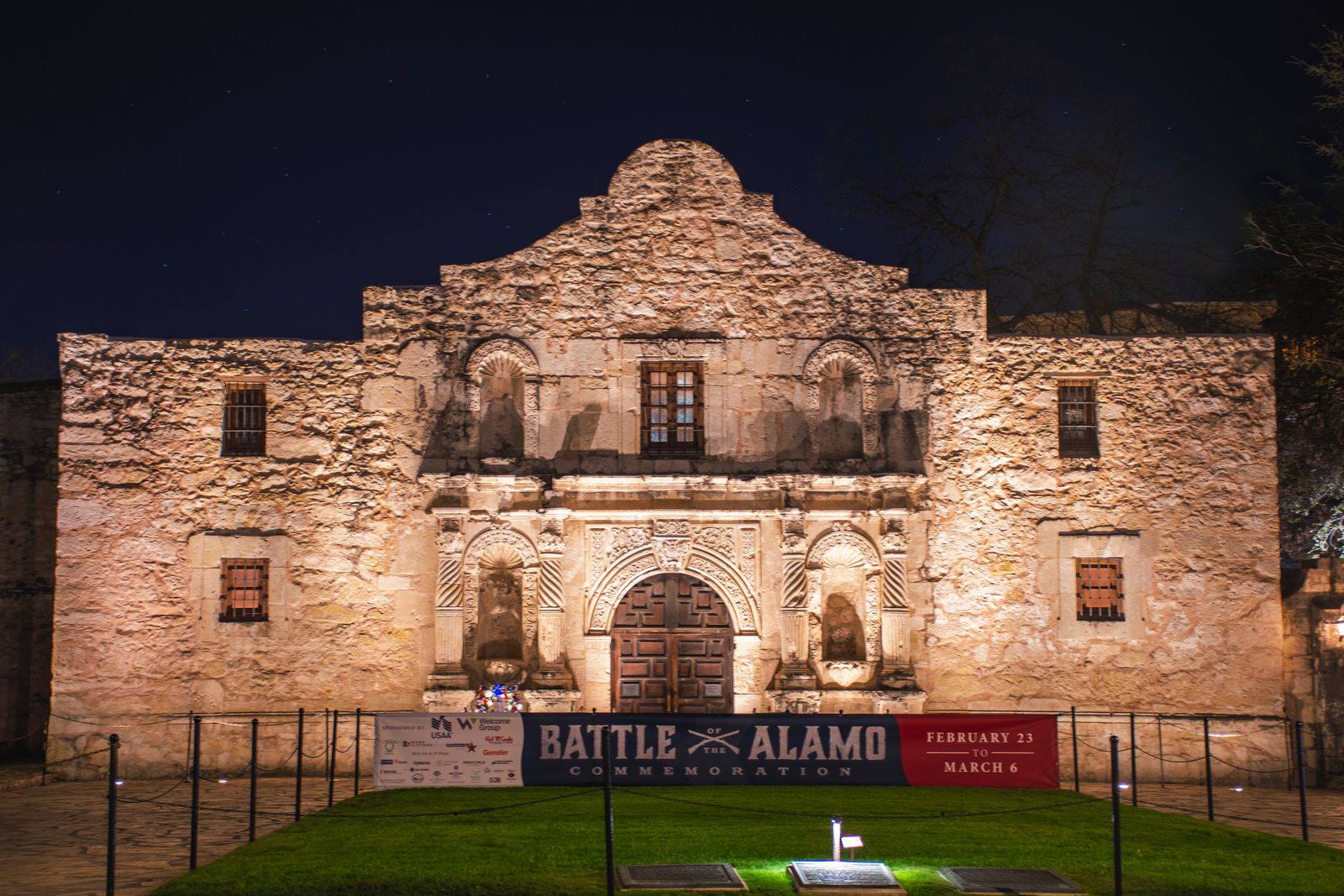
The Alamo — San Antonio, TX · est. 1718 · Texas Revolution The most famous fort-adjacent site in Texas started as a Spanish mission and became the 1836 battle site every Texan kid learns about. The grounds are compact and walkable, exhibits are strong, and it sits in the middle of downtown San Antonio — easy to combine with the River Walk. The full Texas forts list has seven more visitable sites.
How Do You Plan a Fort Day Trip With Kids?
- Time demonstrations first. Living history programs run on schedules. Check the fort's calendar before you leave and build the day around the cannon firing or drill, not the other way around.
- Ask about junior ranger programs. National park sites like Fort McHenry, the Castillo, Fort Vancouver, and Fort Scott offer activity booklets that turn the visit into a scavenger hunt — free, and genuinely effective.
- Go early in summer. Masonry forts turn into ovens by afternoon, especially in Florida and Texas. Morning visits mean cooler ramparts and better demonstration schedules.
- Pair the fort with a payoff. Fort Clinch has a beach, the Alamo has the River Walk, Ticonderoga has Lake Champlain. A two-part day keeps everyone happy.
Every fort here is verified open to the public, but hours and program schedules change seasonally — check the individual fort page and the site's official calendar before you commit to a drive. And if none of these eight is within reach, the region-by-region list of public forts probably has one that is.