Quick Answer: The most popular historic forts to visit in the United States are Fort McHenry in Baltimore, Fort Sumter in Charleston Harbor, the Castillo de San Marcos in St. Augustine, Fort Ticonderoga in upstate New York, and Fort Monroe in Hampton, Virginia. All five are open to the public, and each played a defining role in American history — from the birth of the national anthem to the first shots of the Civil War.
I've spent a lot of time cataloging America's forts — 880 of them at last count — and one thing becomes obvious fast: not all forts are created equal as destinations. Some are unmarked earthworks in a farmer's field. Others are world-class historic sites with museums, ranger programs, and cannon firings. This list covers the second kind — the forts that consistently draw the biggest crowds and reward the trip.
Why Do Millions of People Visit Historic Forts Every Year?
Forts are one of the few places where American history is physical. You can read about the bombardment of 1814, or you can stand on the ramparts of Fort McHenry where it happened. The most visited forts combine three things: a genuinely important story, well-preserved (or well-reconstructed) walls to walk, and easy access from a major city or vacation destination. Every fort below checks all three boxes.
Which Fort Inspired the National Anthem?
Fort McHenry — Baltimore, Maryland
- Established: 1798
- Era: War of 1812
- Status: National Monument and Historic Shrine, open to the public
This is the fort where the Star-Spangled Banner was born. During the British bombardment of Baltimore in September 1814, Francis Scott Key watched through the night from a ship in the harbor, and the flag still flying at dawn gave him the opening lines of what became the national anthem. Today the star-shaped fort sits on a point in Baltimore's harbor with a visitor center, restored barracks, and flag ceremonies. It's an easy half-day trip, and you can browse more sites nearby on the Maryland forts page.
Where Did the Civil War Begin?
Fort Sumter — Charleston Harbor, South Carolina
- Established: 1829
- Era: Civil War
- Status: National park site, reachable by ferry
The first shots of the Civil War were fired at Fort Sumter in April 1861, and that alone makes it one of the most visited forts in the country. The fort sits on an island in Charleston Harbor, so the visit starts with a ferry ride — which is half the fun, with views of the city skyline and the harbor defenses. Pair it with Fort Moultrie on Sullivan's Island, where a palmetto-log fort famously repelled the British fleet in 1776. Together they tell nearly two centuries of coastal defense history — and both feature in our guide to the most well-preserved Civil War forts in the South.
What Is the Oldest Masonry Fort in the United States?
Castillo de San Marcos — St. Augustine, Florida
- Established: 1672
- Era: Spanish Colonial
- Status: National Monument, open to the public
The Castillo de San Marcos is the oldest masonry fort in the continental United States, built by the Spanish from coquina — a soft shellstone that absorbed cannonballs instead of shattering. The fort survived multiple sieges and changed flags several times without ever being taken by force. It anchors St. Augustine's historic district, which means you can walk from the fort straight into the oldest city in the country. Florida is loaded with fort history — 66 sites in the Florida forts directory alone.
Which Fort Is Called America's Fort?
Fort Ticonderoga — Ticonderoga, New York
- Established: 1755
- Era: French & Indian War and American Revolution
- Status: Restored historic site and museum, open seasonally
Fort Ticonderoga guarded the strategic corridor between Lake Champlain and Lake George, and it changed hands repeatedly — built by the French, taken by the British, then famously captured by Ethan Allen and the Green Mountain Boys in 1775 in one of the first American victories of the Revolution. The restored fort runs daily musket demonstrations, and the setting on Lake Champlain is genuinely spectacular. Note that it operates seasonally, so check dates before making the drive.
Why Is Fort Monroe Called Freedom's Fortress?
Fort Monroe — Hampton, Virginia
- Established: 1834
- Era: Civil War
- Status: National Monument, open to the public
Fort Monroe is the largest stone fort ever built in the United States, and it stayed in Union hands throughout the Civil War even though it sits in Virginia. That made it a beacon: enslaved people who reached the fort were declared "contraband of war" and not returned to slavery, earning it the name Freedom's Fortress. The Army left in 2011, and the fort is now open to walk, with a moat you can circle and casemates you can explore. It's one of 30 sites on the Virginia forts page.
Which Fort Changed Military History in a Single Battle?
Fort Pulaski — Chatham County, Georgia
- Established: 1829
- Era: Civil War
- Status: National park site, open to the public
Fort Pulaski near Savannah is where brick forts became obsolete overnight. In April 1862, Union rifled cannons breached its massive walls in about 30 hours — a shock that ended centuries of masonry fortification design. The scarred walls are still visible today, and the fort is beautifully preserved, with a moat, drawbridge, and marsh views. See the full Georgia forts directory for nearby sites.
What Is the Most Remote Fort You Can Visit?
Fort Jefferson — Dry Tortugas, Florida
- Established: 1846
- Era: Civil War
- Status: National park, reachable by ferry or seaplane
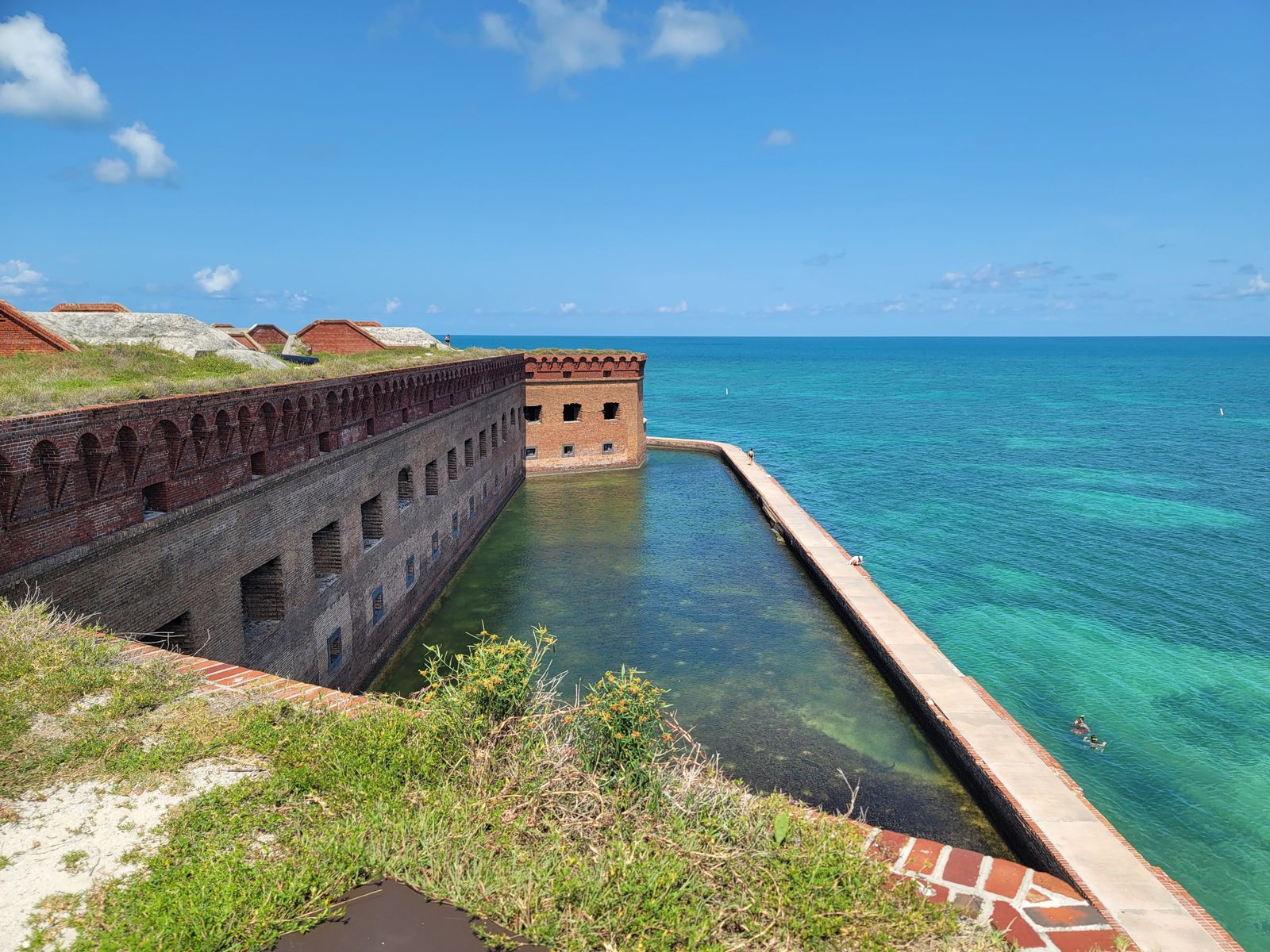
Seventy miles west of Key West, Fort Jefferson is one of the largest masonry structures in the Americas — roughly 16 million bricks sitting on a remote island surrounded by turquoise water. It served as a military prison, most famously holding Dr. Samuel Mudd after the Lincoln assassination. Getting there requires a ferry or seaplane, which keeps crowds down and makes it feel like a genuine expedition. Snorkeling off the fort's walls is a legitimate bonus.
Which Fort Has Guarded Its Post the Longest?
Fort Niagara — Youngstown, New York
- Established: 1726
- Era: French & Indian War through World War II
- Status: Historic site, open to the public
Fort Niagara has watched the mouth of the Niagara River for three centuries. Its centerpiece, the French Castle, dates to 1726 and is one of the oldest buildings in the region. The fort saw action in the French & Indian War, the Revolution, and the War of 1812, and it makes an easy pairing with a Niagara Falls trip — the fort is about 25 minutes north of the falls and dramatically less crowded. New York has 40 forts in the directory, browsable on the New York forts page.
Which Fort Comes With a Beach?
Fort Zachary Taylor — Key West, Florida
- Established: 1845
- Era: Civil War
- Status: State park, open to the public
Fort Zachary Taylor held one of the largest collections of Civil War-era cannons in the country, and it stayed in Union hands throughout the war despite sitting at the end of the Florida Keys. Today it's a state park with the best beach in Key West a short walk from the fort walls — which makes it one of the few forts where you can tour casemates in the morning and snorkel in the afternoon.
How Should You Plan a Fort Visit?
A few things I've learned cataloging these sites:
- Check seasonal hours. Northern forts like Ticonderoga close for winter; southern coastal forts are open year-round but brutally hot in July and August. Spring and fall are the sweet spot almost everywhere.
- Ferries sell out. Fort Sumter and Fort Jefferson are boat-access only. Book ahead in peak season, especially for the Dry Tortugas.
- Budget more time than you think. The big forts reward two to three hours. Ranger talks and cannon demonstrations are usually worth planning around — check the schedule when you arrive.
- Verify before you go. Hours and access change. Every fort page in the directory includes current status, but I always recommend confirming details with the official National Park Service site or state park page before a long drive.
Every fort on this list is open to the public and worth the trip on its own merits — and it's only the beginning: our region-by-region list of forts open to the public goes much deeper. If you're building a bigger itinerary, start with your state's directory page and see what's within reach — most people are surprised how many forts are within an hour of home.