Quick Answer: The most well-preserved Civil War forts in the South are Fort Pulaski (Georgia), Fort Sumter and Fort Moultrie (South Carolina), Fort Morgan and Fort Gaines (Alabama), Fort Pickens and Fort Zachary Taylor (Florida), Fort Monroe (Virginia), and Fort McAllister (Georgia). All are open to the public, and several still carry visible battle damage from the war.
Of the 233 Civil War forts in this directory, the South holds the most dramatic survivors — the big masonry seacoast forts that were built to last centuries and mostly have. This is my shortlist of the ones where the walls, casemates, and in some cases the actual battle scars are still standing.
Why Did So Many Southern Civil War Forts Survive?
Two reasons. First, materials: the Third System seacoast forts of the 1820s–1840s were built from millions of bricks with walls several feet thick — demolishing them was never worth the cost. Second, geography: most sit on barrier islands and harbor points that stayed undeveloped, later becoming parks. The result is a chain of remarkably intact fortresses from Virginia to Texas.
Which Fort Still Shows Its Battle Damage?
Fort Pulaski — Chatham County, GA · est. 1829 The most historically significant preservation story in the South. In April 1862, Union rifled cannons breached Pulaski's walls in about 30 hours, instantly making brick forts obsolete worldwide — and the repaired-but-visible shell damage is still in the southeast wall. The moat, drawbridge, and casemates are all intact. It's the anchor of the Georgia forts directory.
What Survives at the Fort Where the War Began?
Fort Sumter — Charleston Harbor, SC · est. 1829 Sumter absorbed more punishment than almost any fort in American history — the April 1861 bombardment that opened the war, then years of Union siege that reduced its walls dramatically. What stands today is roughly the lower tier of the original fort, stabilized and interpreted by the park service, reached by ferry from Charleston. Its neighbor Fort Moultrie on Sullivan's Island is actually the more complete structure, preserving layers of coastal defense from 1776 through World War II. For ferry logistics, fees, and a one-day harbor itinerary, see our visitor's guide to the forts near Charleston.
Which Alabama Forts Guarded Mobile Bay?
Fort Morgan — Mobile Point, AL · est. 1819 A massive star-shaped brick fort at the mouth of Mobile Bay, and one of the best-preserved Third System forts anywhere. It was the centerpiece of the August 1864 Battle of Mobile Bay — the fight remembered for Admiral Farragut's order to damn the torpedoes — and held out under bombardment before surrendering that month. The brickwork, arches, and tunnels are in outstanding condition.
Fort Gaines — Dauphin Island, AL · est. 1821 Morgan's partner across the bay's mouth, smaller but exceptionally intact, with original cannons and bastions. Together the two forts make a genuine two-stop pilgrimage — a ferry crosses the bay between them. Alabama's full list is on the Alabama forts page.
Which Florida Forts Are Best Preserved?
Fort Pickens — Pensacola Beach, FL · est. 1834 A sprawling brick fort on Santa Rosa Island that stayed in Union hands throughout the war, exchanging fire across Pensacola Bay with Confederate-held Fort Barrancas. Both survive, and Pickens in particular rewards a long visit — tunnels, batteries from multiple eras, and national seashore beaches beside it.
Fort Zachary Taylor — Key West, FL · est. 1845 Held by the Union for the entire war, Taylor preserved one of the largest collections of Civil War cannons in the country within its walls. Now a state park with Key West's best beach attached.
Fort Clinch — Fernandina Beach, FL · est. 1847 Among the most complete brick forts in the South — barracks, kitchens, and galleries all walkable — with regular living history programming that also makes it one of the best forts for a family day trip. All three are on the Florida forts page.
What About Earthwork Forts?
Masonry wasn't the only thing that survived. Fort McAllister south of Savannah is the best-preserved earthwork fort in the South — its sand-and-mud walls shrugged off naval bombardment that would have cracked brick, and the earthworks stand today much as they did when Sherman's troops finally stormed them in December 1864. It's an important counterpoint: by the war's end, dirt had beaten brick.
Is Fort Monroe Worth Including?
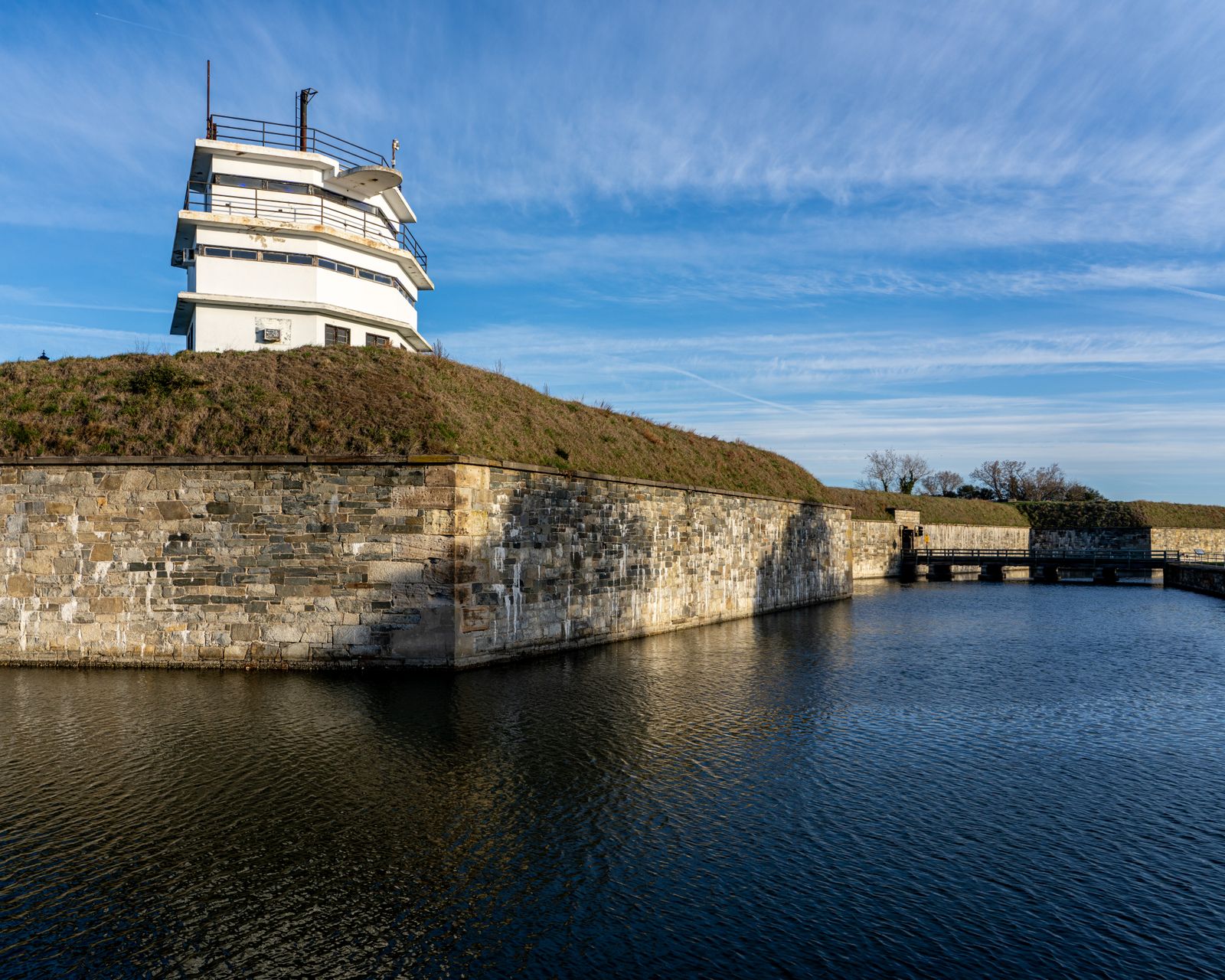
Absolutely. Fort Monroe in Hampton is the largest stone fort ever built in America and arguably the best-preserved of them all — it remained an active Army post until 2011, which meant continuous maintenance for over 175 years. Its Civil War story is unique too: it never fell, and its role as a refuge for enslaved people seeking freedom earned it the name Freedom's Fortress. See the Virginia forts page for the state's other Civil War sites.
How Should You Visit These Forts?
If I were building a trip around this list, I'd do it as coastal clusters rather than one long haul: Charleston for Sumter and Moultrie, Savannah for Pulaski and McAllister (itinerary in our Savannah forts guide), the Gulf for Morgan, Gaines, and Pickens, and Hampton Roads for Monroe. Each cluster is a comfortable weekend. Summer visits are hot inside brick walls — spring and fall are the sweet spot, and hurricane season occasionally closes the barrier island forts, so check status on each fort's page before traveling. For everything beyond the Civil War South, the region-by-region list of forts open to the public covers the rest of the country.