Fort Astoria (Astoria, Oregon)
Astoria · Oregon · War of 1812
History & Significance
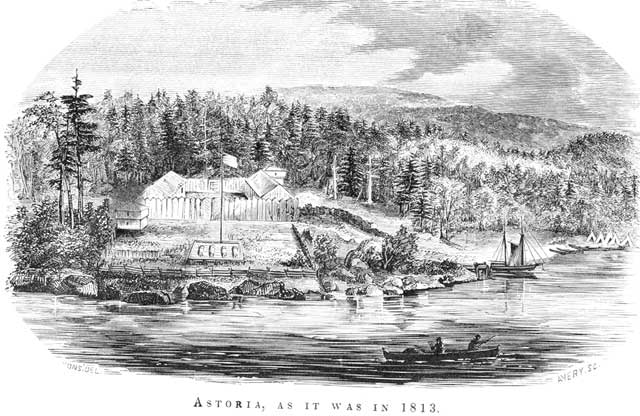
The Astor Expedition was a grand, two-pronged mission, involving scores of men, that attempted to establish a worldwide trading network centered at present-day Astoria. Fort Astoria, the trading post constructed near the mouth of the Columbia River, was the first permanent United States settlement on the Pacific Coast.
The traders built a large trading center, dwelling house, blacksmith shop, and storage shed, surrounded by a wooden palisade ninety feet on a side, about ten miles inside the river's mouth on its south side. On April 12, 1811, they named this compound Fort Astoria in honor of Astor.
Soon afterward the Tonquin, the fort's link to civilization, sank during a battle with Native Americans off Vancouver Island, British Columbia. The onset of the War of 1812 caused the PFC to fold as it was too isolated to expect any military protection or support from the United States.
McDougall signed the final agreement with McTavish, in Hunt's absence, on October 16, 1813. A few days later, McDougall handed over the keys to Astoria's warehouse.
McTavish lowered the American flag and raised the British flag above Fort Astoria. Captain William Black took possession of the fort on December 12, 1813, renaming it Fort George for his king.
He ran up the Union Jack and smashed a bottle of Madeira wine on the flagpole. The Treaty of 1818 established a 'joint occupancy' of the Pacific Northwest between the United Kingdom and the United States. Members of the expedition were to discover South Pass, through which hundreds of thousands of settlers on the Oregon, Mormon, and California Trails used to later pass through the Rocky Mountains.
Key Facts
Map
View larger map ↗ · © OpenStreetMap contributors
🧳 Visiting
What you’ll see when you visit:
- Reconstructed blockhouse at the mouth of the Columbia River
- Site of first American settlement on the Pacific coast (1811)
- Pacific Fur Company trading post hub for beaver and sea otter commerce
- Historic fur trade between European Americans and Chinookan peoples
- National Historic Landmark with interpretive exhibits on regional history
Sources
- https://en.wikipedia.org/wiki/Fort_Astoria
- https://www.oregonencyclopedia.org/articles/fort_george/
- https://www.oregonhistoryproject.org/articles/historical-records/fort-astoria-1813/
- http://tps.cr.nps.gov/nhl/detail.cfm?ResourceId=471&ResourceType=Site
- https://www.ebsco.com/research-starters/military-history-and-science/fort-astoria
- https://www.legendsofamerica.com/fort-astoria-oregon/