Fort Reno (El Reno, Oklahoma, Oklahoma)
El Reno, Oklahoma · Oklahoma · Indian Wars
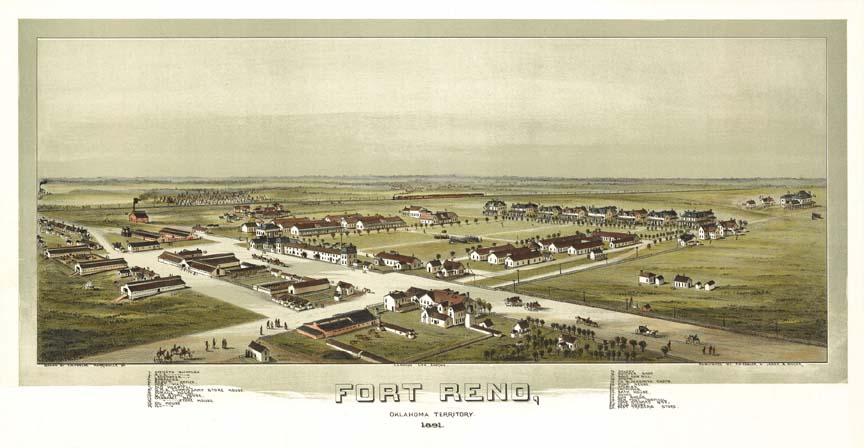
History & Significance
Fort Reno was assigned to exercise military control over the Southern Cheyenne and Southern Arapaho Reservation, which stretched westward between the North Canadian and Washita watersheds to the Texas Panhandle. In the 1880s, during the Oklahoma boomer invasion under David L. Payne, Fort Reno's Ninth Cavalry Buffalo Soldiers and Indian scouts played a major role in searching for and arresting those who illegally entered the area, and troops of the Fifth Cavalry monitored the opening and signaled the start of the historic Land Run of 1889.
The Third Cavalry acted in a similar fashion for other openings, notably that of the Cheyenne-Arapaho Reservation in 1892 and of the Cherokee Outlet in 1893. The fort's cemetery contains the remains of pioneer citizens, military personnel, victims of the Northern Cheyenne outbreak, and World War II German prisoners, with Ben Clark, the longtime frontier scout who served Custer and Sheridan, among its notable grave markers.
Fort Reno was listed in the National Register of Historic Places in 1970. In 1948 the fort was transferred to the U.S. Department of Agriculture, which in coordination with Oklahoma A&M College established a Livestock and Forage Research Center there.
Key Facts
Map
View larger map ↗ · © OpenStreetMap contributors
🧳 Visiting
What you’ll see when you visit:
- 1874 cavalry post with restored buildings and barracks
- Cemetery with graves of soldiers, POWs, and frontier settlers
- Visitor center exhibits on Indian Wars era and WWII POW history
- Preserved parade ground and officer quarters
- Functioning USDA research facility on original grounds
Sources
- https://www.okhistory.org/publications/enc/entry.php?entry=FO037
- https://en.wikipedia.org/wiki/Fort_Reno_(Oklahoma)
- http://www.fortreno.org/history-2/
- https://www.nps.gov/places/oklahoma-fort-reno.htm
- https://www.hmdb.org/m.asp?m=39808