Fort Ridgely (Nicollet County, south of Fairfax, Minnesota)
Nicollet County, south of Fairfax · Minnesota · Dakota War of 1862, Indian Wars
History & Significance
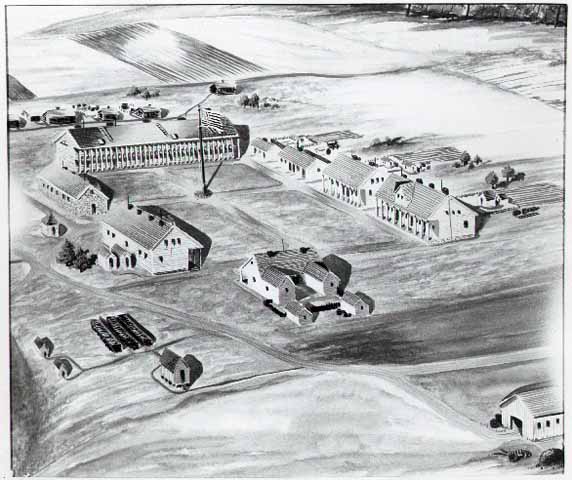
Located near the confluence of the Minnesota River and Fort Ridgely Creek, which was inside a Dakota reservation until 1862, Fort Ridgely was built at a moment of acute territorial pressure. The fort was designed as a police station to keep peace as settler-colonists poured into the former Dakota lands.
For nine years it served as a garrison and community hub, supporting expanding white settlement even as unkept promises by the US government, nefarious practices by fur traders, and crop failure all helped create tensions that erupted into the US-Dakota War in August 1862. The fort's role during the conflict proved decisive: The Dakota besieged and partially destroyed the fort, but were unable to storm it before the August 27 arrival of Colonel Henry Sibley with 1,400 men from Fort Snelling prompted them to retreat.
Fort artillery is credited with repulsing the overwhelming force; Ordinance Sergeant John Jones is credited with Ridgely's successful defense by organizing men with artillery experience to man three cannons, two 12-pounders and the 24-pounder. With all the caissons available, while one was servicing a gun position another was restocked and readied to immediately replace it when it was depleted.
This allowed the guns to be fired non-stop when needed. After the war's end, the Army abandoned the fort in 1867; civilians occupied the remaining buildings and later dismantled them for their own use. To recognize the post's role in the US–Dakota War, the state of Minnesota purchased the site in 1895 and established Fort Ridgely State Park in 1911.
Key Facts
Map
View larger map ↗ · © OpenStreetMap contributors
🧳 Visiting
What you’ll see when you visit:
- Exposed foundations of 1850s frontier Army outpost
- Dakota War of 1862 artillery defense site with documented siege history
- Museum in reconstructed commissary building with period artifacts
- Rolling prairie landscape characteristic of Minnesota frontier
- Strategic river valley position overlooking surrounding terrain
Sources
- https://www.mnhs.org/fortridgely/learn/history
- https://www.mnhs.org/mnopedia/search/index/structure/fort-ridgely
- https://en.wikipedia.org/wiki/Fort_Ridgely
- https://www.battlefields.org/visit/heritage-sites/fort-ridgely-state-historic-site
- https://en.wikipedia.org/wiki/Battle_of_Fort_Ridgely
- https://www.mnhs.org/usdakotawar/stories/history/attack-fort-ridgely