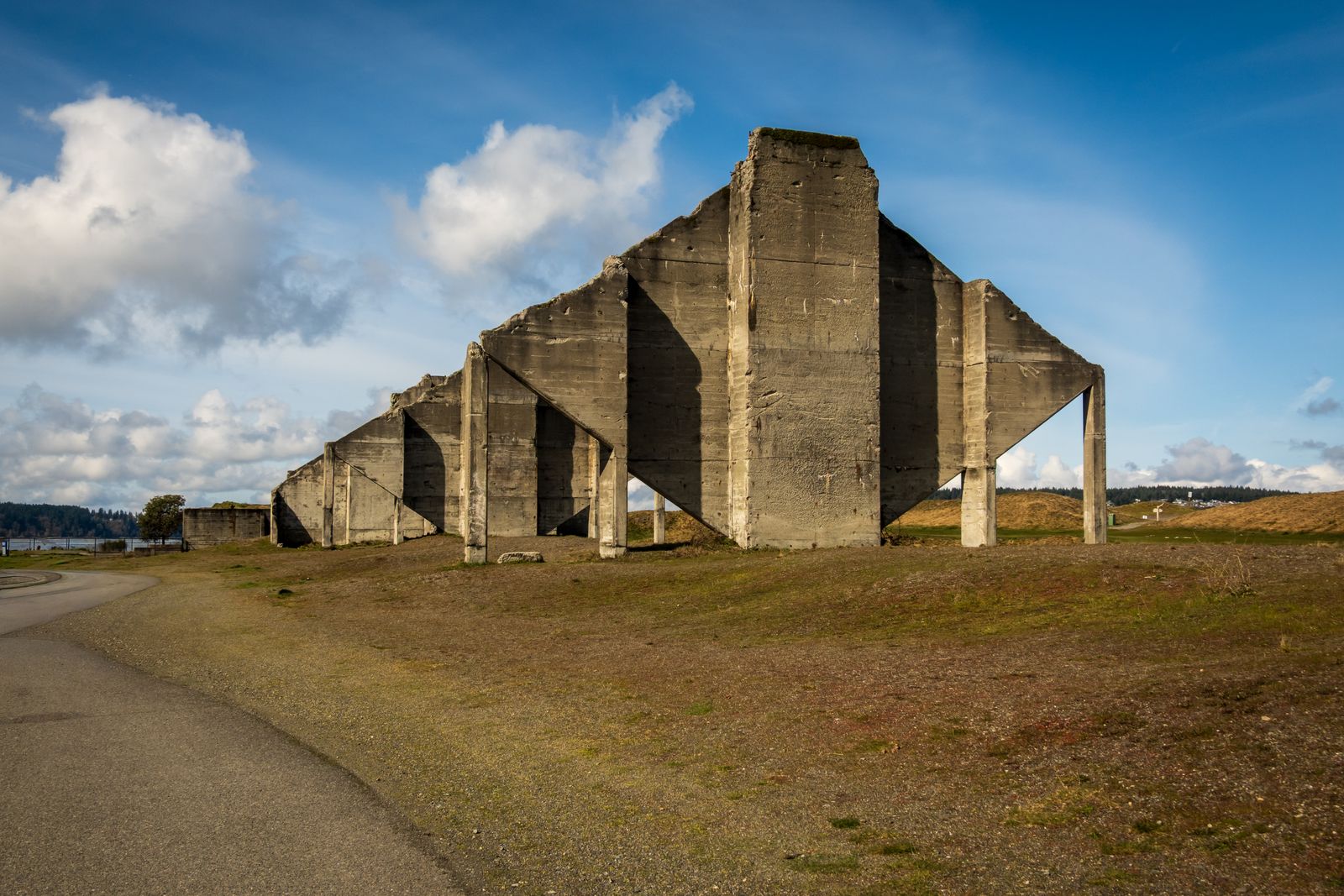
Quick Answer: The best forts to visit in Washington state are Fort Vancouver (reconstructed Hudson's Bay Company post), Fort Worden, Fort Casey, and Fort Flagler (the "Triangle of Fire" guarding Puget Sound), Fort Nisqually (living history museum in Tacoma), and Fort Simcoe and Fort Spokane in the east. Washington has 23 forts in the directory, and 21 are open to visitors — one of the highest rates of any state.
Washington's fort story is unusual: it isn't about the Revolution or the Civil War, but about fur, frontiers, and the defense of Puget Sound. The result is a collection unlike anywhere else in the country — trading posts, Victorian garrisons, and massive concrete gun batteries perched over saltwater. And nearly all of it is visitable, mostly inside an outstanding state park system.
What Was the Triangle of Fire?
At the turn of the 20th century, the Army built three forts whose overlapping guns covered Admiralty Inlet — the front door to Puget Sound. Together they were known as the Triangle of Fire, and all three survive as state parks:
Fort Worden — Port Townsend · est. 1902 The flagship. Miles of concrete batteries in the bluffs, a full Victorian officers' row, beaches, a lighthouse, and lodging in the historic quarters — you can sleep inside the fort. It's a genuine weekend destination rather than a stop.
Fort Casey — Whidbey Island · est. 1897 The most dramatic gun experience of the three, with restored disappearing-carriage artillery mounted in the batteries and the Admiralty Head Lighthouse alongside. The ferry ride to Whidbey is part of the fun.
Fort Flagler — Marrowstone Island · est. 1897 The quietest corner of the triangle, with batteries, campgrounds, and beaches wrapping the island's northern tip. Bring a bike.
The three forts genuinely make sense as a set — you can see each from the others across the water, which is exactly the point.
Where Can You Experience the Fur Trade Era?
Fort Vancouver — Vancouver · est. 1824 The Hudson's Bay Company's headquarters for the entire Pacific Northwest, and the endpoint of the early Oregon Trail — its role in that story is covered in our forts along the Oregon Trail guide. The palisade and buildings have been reconstructed on the original site as a national historic site, with a working blacksmith shop and trade store. If you want to understand why Washington exists at all, start here.
Fort Nisqually — Tacoma · est. 1832 The HBC's Puget Sound farm and trading post, re-created as a living history museum in Tacoma's Point Defiance Park, with two surviving original buildings among the reconstructions. Costumed interpreters make it one of the best family history stops in the state.
Which Forts Tell the Frontier Army Story?
Fort Simcoe — Yakima County · est. 1856 A remarkable survivor in the hills of the Yakama Nation, where original 1850s officers' houses — including gothic-revival commanders' quarters — still stand around the parade ground. One of the most atmospheric and least crowded historic sites in Washington.
Fort Spokane — Lincoln County · est. 1880 Brick barracks and outbuildings from the frontier army's last generation, preserved where the Spokane and Columbia rivers meet. The site also interprets its later, darker chapter as an Indian boarding school — an important story told directly.
Fort Steilacoom — Lakewood · est. 1849 The first U.S. Army post on Puget Sound, with a handful of original 1850s buildings surviving as a small museum.
Fort Walla Walla — Walla Walla · est. 1858 A frontier post whose grounds now anchor a large regional museum complex in the state's southeast corner.
What About World War II Sites?
Fort Ebey — Whidbey Island · est. 1942 Built for a war that never reached the coast, Fort Ebey's gun battery now overlooks some of the best bluff-top hiking trails in the region. Pair it with Fort Casey for a two-era Whidbey day.
Fort Columbia — Chinook · est. 1896 Guarding the Columbia River's mouth, with intact batteries and garrison buildings inside a state park — a natural stop on any Long Beach Peninsula trip.
Can You Stay Overnight at a Washington Fort?
Yes — and it's one of the state's best-kept travel secrets. Fort Worden offers lodging in its restored Victorian officers' houses and former barracks, letting you wake up inside a working historic fort with the beach and batteries out the door. Fort Casey, Fort Flagler, and Fort Ebey all have campgrounds within the parks, several with saltwater views, and they book out for summer weekends months ahead. Fort Columbia even rents historic houses on the grounds. No other state makes sleeping in its forts this easy, and building an overnight into the Triangle of Fire loop turns a sightseeing run into a genuine trip.
How Should You Plan a Washington Fort Trip?
The state sorts neatly into three trips: a Puget Sound loop (Worden, Casey, Flagler, plus Ebey — doable in a long weekend with ferries connecting the pieces), a southwest corner day (Fort Vancouver plus Fort Columbia on the coast), and an eastern swing (Simcoe, Walla Walla, Spokane) for the frontier story. A Discover Pass covers the state parks; Fort Vancouver is federal.
One note: Fort Lewis near Tacoma remains an active military installation, not a visitor site. Everything else above is open to the public — all 23 sites, with era and status for each, are on the Washington forts page.