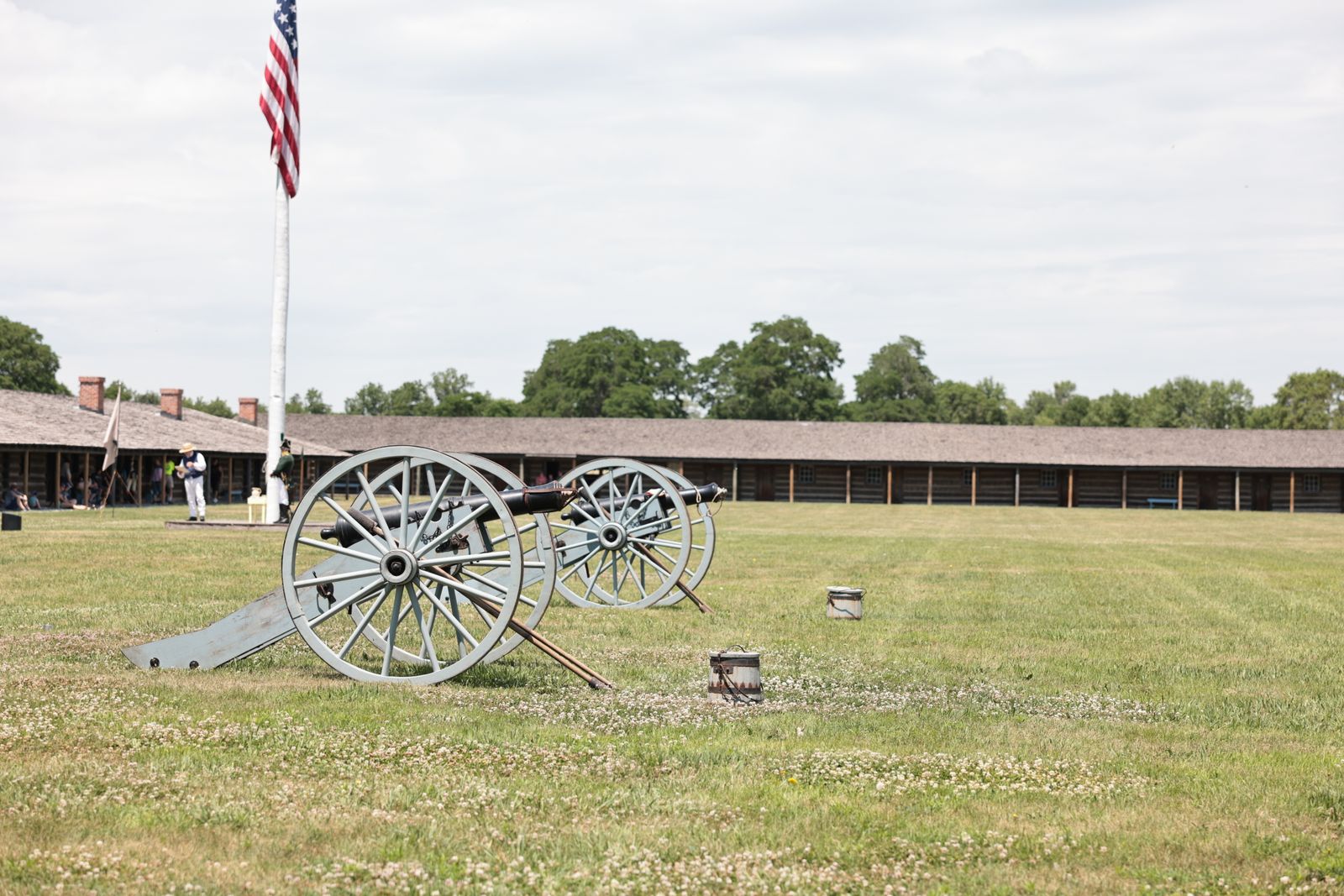
Quick Answer: The major forts along the Oregon Trail, from east to west, were Fort Leavenworth (Kansas), Fort Kearny (Nebraska), Fort Laramie, Fort Caspar, and Fort Bridger (Wyoming), Fort Hall and Fort Boise (Idaho), and Fort Vancouver (Washington) at the trail's end. Most began as fur-trading posts before the Army took them over, and several survive today as parks and historic sites you can visit.
The Oregon Trail wasn't a road — it was a 2,000-mile gamble, and the forts strung along it were the only sure things on the map. Emigrants planned their entire journey around them: places to repair wagons, buy flour at painful prices, mail letters, and get news of what lay ahead. Tracing the forts is the best way I know to understand the trail itself, so here they are in the order a wagon train would have met them.
Where Did the Trail's Fort Chain Begin?
Fort Leavenworth — Kansas · est. 1827 The oldest active Army post west of the Mississippi anchored the eastern edge of the trail system, supplying the jumping-off towns along the Missouri River. It remains an active base today — not a tourist stop — but its role as the logistical root of westward expansion is hard to overstate. Kansas's full frontier story is on the Kansas forts page.
What Was the First Fort Built to Protect Emigrants?
Fort Kearny — near Kearney, NE · est. 1848 Fort Kearny was established specifically to protect Oregon Trail traffic — the first post built for the emigrants rather than for fur traders or soldiers' own supply lines. Sitting where the feeder routes converged on the Platte River valley, it was the point where scattered wagon parties became a single great migration stream. The site is preserved as a state historical park. Nebraska's trail-era posts, including Fort Mitchell near Scotts Bluff, are on the Nebraska forts page.
Why Was Fort Laramie the Most Important Stop on the Trail?
Fort Laramie — Goshen County, WY · est. 1834 If the trail had a capital, this was it. Fort Laramie began as a fur-trading post in 1834 and was purchased by the Army in 1849 as emigrant traffic exploded. Roughly a third of the way to Oregon, it was where travelers rested, resupplied, lightened their wagons, and made the go-or-turn-back decision before the mountains. It was also the site of major treaty councils with the Plains nations. Today it's a national historic site with a remarkable collection of original buildings — one of the best places anywhere to stand inside the trail's story.
Which Wyoming Forts Guarded the River Crossings?
Fort Caspar — Casper, WY · est. 1859 The post at the critical North Platte River crossing, where emigrants either ferried, bridged, or forded. The reconstructed fort and museum in modern Casper interpret the crossing era well.
Fort Bridger — Uinta County, WY · est. 1842 Founded by the mountain man Jim Bridger as a trading post aimed squarely at emigrant wallets — wagon repairs, fresh stock, supplies. It later became a military post and is now a state historic site. It also marks a great forking point of the trails, where routes diverged toward Oregon, California, and Salt Lake. Wyoming's frontier posts, including Fort Phil Kearny of Bozeman Trail fame, are on the Wyoming forts page.
What Happened at Fort Hall and Fort Boise?
Fort Hall — Bannock County, ID · est. 1834 The trail's great decision point. At Fort Hall, on the Snake River plain, California-bound travelers split southwest while Oregon-bound wagons pushed northwest — and the post's traders were famous for talking up one route or the other.
Fort Boise — near Parma, ID · est. 1834 The Hudson's Bay Company's counterweight to Fort Hall, near the Snake River crossing that emigrants dreaded. Both original posts are gone, but their sites and interpretive markers survive; see the Idaho forts page.
Where Did the Oregon Trail End?
Fort Dalles — The Dalles, OR · est. 1850 For years, The Dalles was where the overland trail effectively ended and the terrifying Columbia River passage began — until the Barlow Road offered a land alternative around Mount Hood. The surgeon's quarters from the 1850s military post survives as a museum. Oregon's other trail-era sites are on the Oregon forts page.
Fort Vancouver — Vancouver, WA · est. 1824 The true terminus of the early trail years. The Hudson's Bay Company's Columbia headquarters was the region's supply center, and its chief factor famously extended credit and provisions to exhausted American emigrants — arguably saving the first waves of settlement. The fort has been reconstructed on its original site as a national historic site, with a working blacksmith shop and trade store — hands-on enough that it's also one of our picks for the best forts for a family day trip. It's the single best endpoint for retracing the trail today; for everything else the state offers — including the Puget Sound coastal batteries — see our Washington state forts guide.
Can You Still Drive the Fort Route Today?
Yes — and it's one of the great American road trips. Interstate 80 and US 26/30 shadow the trail closely: Fort Kearny, Fort Laramie, Fort Caspar, and Fort Bridger line up across Nebraska and Wyoming in a comfortable two-to-three-day drive, with wagon ruts still visible at several points between them. Fort Laramie and Fort Vancouver are the two must-sees if you only have time for bookends. Check each fort's page for current hours before you go — several are seasonal.