Quick Answer: The forts near Charleston, SC are Fort Sumter (ferry access from downtown), Fort Moultrie on Sullivan's Island (drive-up access), Fort Johnson on James Island, Castle Pinckney (visible from the waterfront but closed to visitors), and the site of Fort Wagner on Morris Island (boat access only). Fort Sumter and Fort Moultrie are the two essential visits.
No American harbor packs more fort history into less water than Charleston. Standing at The Battery downtown, you can see or point toward five fortifications spanning two centuries — including the one where the Civil War began. Here's how I'd sort them for a visit, from essential to specialist.
How Do You Visit Fort Sumter?
Fort Sumter — Charleston Harbor · est. 1829 · Civil War The fort where the first shots of the Civil War were fired in April 1861 sits on a man-made island in the harbor mouth, so the only way in is by ferry — and the boat ride doubles as a harbor tour, passing the city skyline and the other defenses. Years of Union bombardment later in the war reduced the original three-tier fort substantially; what you walk today is the stabilized lower level, well interpreted by the park service. Book the ferry ahead in spring and summer.
Is Fort Moultrie Worth Visiting Too?
Fort Moultrie — Sullivan's Island · est. 1776 · Revolution through WWII Yes — and honestly, if you can only do one fort structure, Moultrie is the more complete experience. This is where a half-finished palmetto-log fort improbably beat the British fleet in June 1776, and the site stayed in service through World War II. The result is a layer cake of American coastal defense: 1809 brickwork, Civil War batteries, and 20th-century gun emplacements all on one walkable site, with drive-up access and no ferry required. Sumter gives you the story; Moultrie gives you the fort — both earn their spots in our guide to the most well-preserved Civil War forts in the South.
What Happened at Fort Wagner?
Fort Wagner — Morris Island · est. 1862 · Civil War Fort Wagner is where the 54th Massachusetts Volunteer Infantry — one of the first Black regiments in the Union Army — led the famous assault of July 1863, a moment that transformed the case for Black soldiers in the war. The sacrifice came at terrible cost, and the battle became one of the most consequential of the entire siege of Charleston. Visiting is another matter: Morris Island is reachable only by boat, and coastal erosion has claimed much of the original fort site. Most people experience Wagner from the water or through the harbor's museums — but knowing the story changes how you see the whole harbor.
What Are Charleston's Lesser-Known Forts?
Fort Johnson — James Island · est. 1765 The signal shot that opened the bombardment of Sumter was fired from Fort Johnson. The site today hosts marine research facilities, with surviving traces including an early powder magazine — a quick stop for completists rather than a destination.
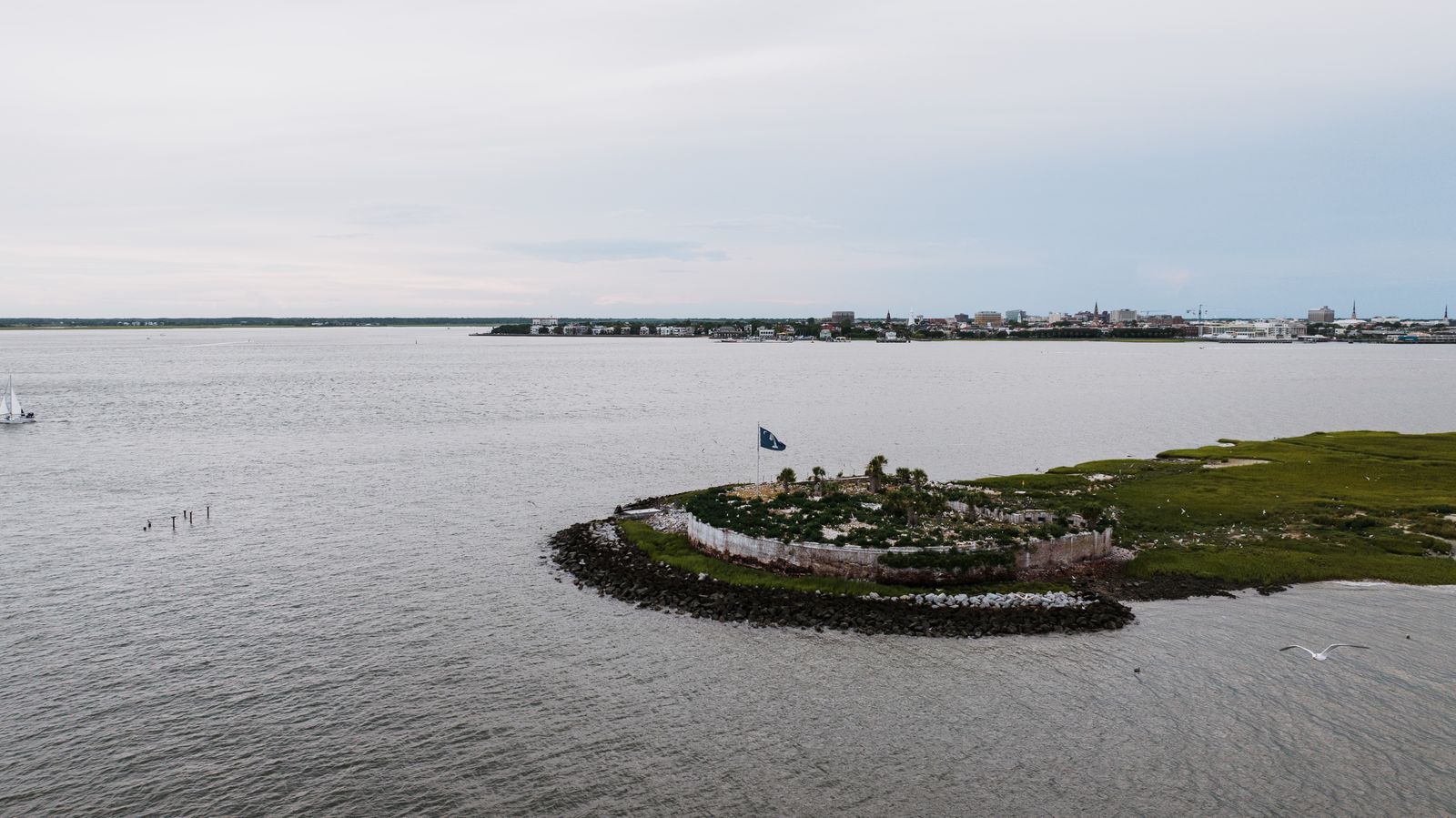
Castle Pinckney — Shutes Folly Island · est. 1810 The small round fort on the island just off The Battery. It's not open to visitors, but it's one of the most photographed pieces of the harbor — you'll see it clearly from the waterfront and from the Sumter ferry.
The Battery — downtown Charleston Charleston's famous seawall promenade served as an artillery position during the Civil War, and White Point Garden at its tip displays period guns and monuments. It's the free, walk-anytime piece of the harbor's defensive story — and the best vantage point for orienting yourself to everything else on this list.
Are the Charleston Forts Free to Visit?
Mostly, with one big exception. Fort Moultrie charges a modest per-person entrance fee (covered by the America the Beautiful annual pass), and The Battery is free and open around the clock. Fort Sumter itself has no entrance fee — but the only way to reach it is the concession ferry, and that ticket is the real cost of the visit, so budget for it per person and book ahead in spring and summer. Fort Johnson's grounds are open during business hours at no charge. Plan around heat in July and August: the ferry deck and Moultrie's ramparts have little shade, and the first departures of the day are consistently the most comfortable.
What's the Best One-Day Charleston Fort Itinerary?
Morning ferry to Fort Sumter (book the first departure — cooler and less crowded), then drive to Sullivan's Island for Fort Moultrie and lunch on the island, and finish with a golden-hour walk along The Battery, picking out Castle Pinckney and the harbor forts you visited from the seawall. That's the full sweep of the harbor's history in one comfortable day.
If you're extending the trip, Fort Fremont down in Beaufort County preserves Spanish-American War batteries on St. Helena Island, and the Revolutionary War earthworks at Old Ninety Six and Star Fort reward the drive inland. The state's complete list is on the South Carolina forts page.