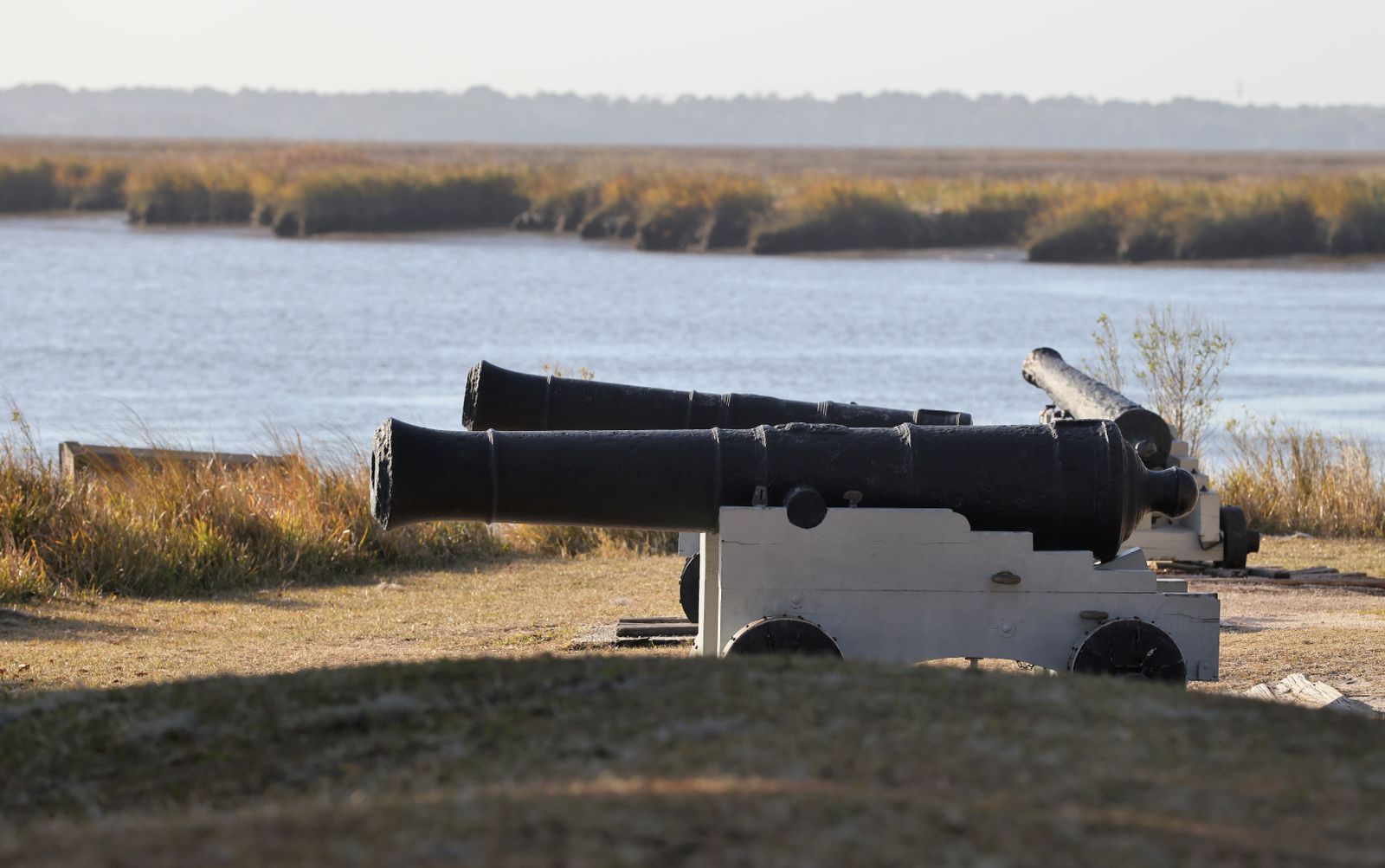
Quick Answer: The forts near Savannah, GA are Fort Pulaski (15 miles east, toward Tybee Island), Fort James Jackson (on the Savannah River just outside downtown), Fort McAllister (about 25 miles south), and Fort Screven on Tybee Island. Fort King George in Darien and Fort Frederica on St. Simons Island make excellent additions on a coastal day trip.
Savannah sits at the center of the richest fort corridor in the South. Within a 30-minute drive you can cover a brick giant that changed military history, a riverside fort that guarded the city for over a century, and the earthworks that ended Sherman's March to the Sea — and the colonial coast to the south adds two more if you keep driving. Here's the full local lineup.
Which Fort Near Savannah Is the Must-See?
Fort Pulaski — Chatham County · est. 1829 · Civil War Fifteen minutes from downtown on the road to Tybee, Fort Pulaski is the essential stop. In April 1862, Union rifled cannon on Tybee Island breached its brick walls in about 30 hours — a result that made masonry forts obsolete everywhere, overnight. The repaired breach is still visible in the wall, and the rest of the fort is in beautiful condition: full moat, drawbridge, casemates, and marsh views from the ramparts — condition that earns it the top spot in our guide to the most well-preserved Civil War forts in the South. Give it two hours minimum.
What Is Old Fort Jackson?
Fort James Jackson — Savannah River · est. 1808–1812 Known locally as Old Fort Jackson, this compact brick fort sits right on the river a few minutes from downtown — close enough to watch container ships glide past the ramparts, which is half the experience. It's one of the oldest standing brick fortifications in Georgia, served through the Civil War as part of Savannah's river defenses, and runs regular cannon-firing programs. Where Pulaski is grand, Jackson is intimate; they complement each other well in a single day.
Where Did Sherman's March to the Sea End?
Fort McAllister — Bryan County · est. 1861 · Civil War About 25 miles south of the city, Fort McAllister is the earthwork counterpoint to Pulaski's brick lesson. Its sand-and-mud walls absorbed repeated Union naval bombardments that would have shattered masonry — and held until December 1864, when Sherman's infantry stormed it from the landward side, ending the March to the Sea and sealing Savannah's fate. The earthworks are wonderfully preserved inside a state park on the Ogeechee River, with a strong museum.
What Fort Is on Tybee Island?
Fort Screven — Tybee Island · est. 1898 · Spanish-American War era If you're already headed to Tybee's beach — and past Pulaski, you basically are — Fort Screven's concrete gun batteries line the island's north end. It's a different century of coastal defense than everything else on this list, active from the Spanish-American War era through World War II, and the battery area now houses a local museum. An easy add-on rather than a standalone trip.
Which Colonial Forts Are Worth the Coastal Drive?
Head south down the coast and you drop back another century:
Fort King George — near Darien · est. 1721 The earliest English fort on Georgia's coast, reconstructed as a cypress blockhouse and palisade on the Altamaha delta. About an hour from Savannah, and one of the most atmospheric colonial sites in the state.
Fort Frederica — St. Simons Island · est. 1736 General Oglethorpe's fortified town, built to hold the southern frontier against Spanish Florida. The tabby ruins of the fort and town streets sit under enormous live oaks — a quiet, beautiful national park site about 75 minutes from Savannah. Both pair naturally into one colonial-coast day trip.
When Is the Best Time to Visit Savannah's Forts?
October through April, without much argument. Savannah's coastal forts are open year-round, but summer brings serious heat and humidity to brick casemates and open earthworks alike — plus the tail of hurricane season, which occasionally closes Pulaski and McAllister on short notice. Spring azalea season is the most beautiful window, and winter weekdays are the quietest; Pulaski's moat and ramparts with nobody else on them is a different experience entirely. Cannon and musket demonstrations at Old Fort Jackson and living history weekends at Fort McAllister run on published schedules, so check each site's calendar and time your day around a firing — it's worth planning for.
What's the Best Savannah Fort Itinerary?
For one day: Fort Pulaski in the morning, lunch and Fort Screven on Tybee, then Old Fort Jackson on the way back into the city — three forts, one road, zero backtracking. With a second day, do Fort McAllister in the morning and continue south to Fort King George and Fort Frederica for the colonial story.
All six sites are open to the public with modest admission fees; the state parks and national park sites use separate pass systems, so an America the Beautiful pass covers Pulaski and Frederica but not the state sites. The complete state list, including the interior and frontier forts, is on the Georgia forts page.