Fort Sedgwick (Sedgwick County, Colorado)
Sedgwick County · Colorado · Indian Wars
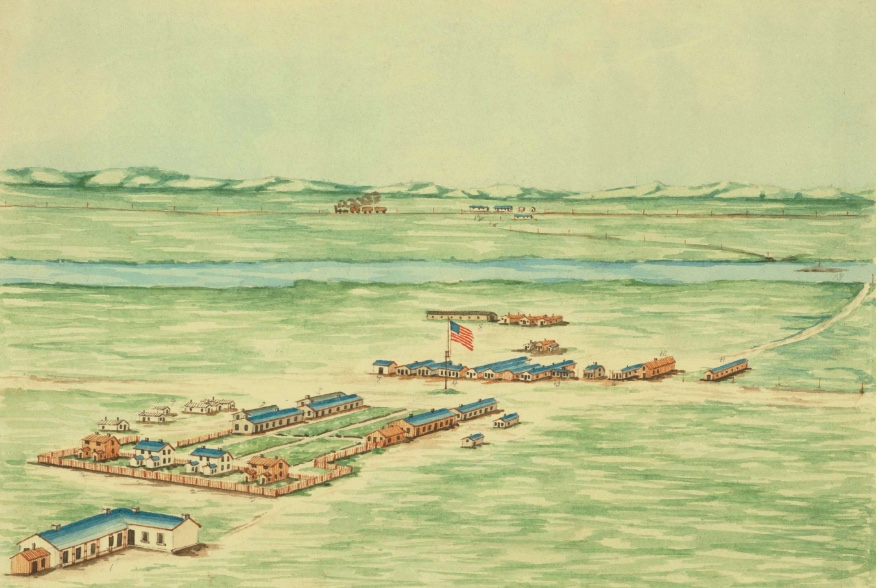
History & Significance
Camp Rankin was established near Julesburg in 1864 with sod huts in response to increased skirmishes with Plains Indians. The post was renamed Fort Sedgwick in honor of Major General John Sedgwick, a Union Army officer.
On January 7, 1865, approximately 1,000 Cheyenne and Sioux warriors attacked the fort in retaliation for the Sand Creek massacre, killing several Native Americans and soldiers, with extensive food supplies looted from nearby Julesburg. Further attacks occurred in 1865, including the burning of Julesburg in February.
In June 1867, General William Tecumseh Sherman ordered George Armstrong Custer and the 7th Cavalry to patrol near Fort Sedgwick and along the South Platte and Smoky Hill Trails. The post was abandoned in May 1871, and soldiers interred there were reburied at Fort McPherson National Cemetery in Nebraska. Fort Sedgwick's history is preserved at the Fort Sedgwick Museum in Julesburg.
Key Facts
Map
View larger map ↗ · © OpenStreetMap contributors
🧳 Visiting
What you’ll see when you visit:
- 1864 military post protecting the Overland Stage Route during Plains Indian Wars
- Sand Creek massacre context and 1865 Cheyenne and Sioux attack site
- Museum exhibits in nearby Julesburg covering fort history and era
- Historical markers at the original fort location near Julesburg
Sources
- https://en.wikipedia.org/wiki/Fort_Sedgwick
- https://sedgwickcounty.colorado.gov/historical-facts
- https://coloradoencyclopedia.org/article/sedgwick-county
- https://www.hmdb.org/m.asp?m=47365
- https://www.hmdb.org/m.asp?m=47341
- https://theclio.com/entry/76712
- https://www.townofjulesburg.com/page/museums