Fort Knox (Prospect, Maine)
Prospect · Maine · Civil War
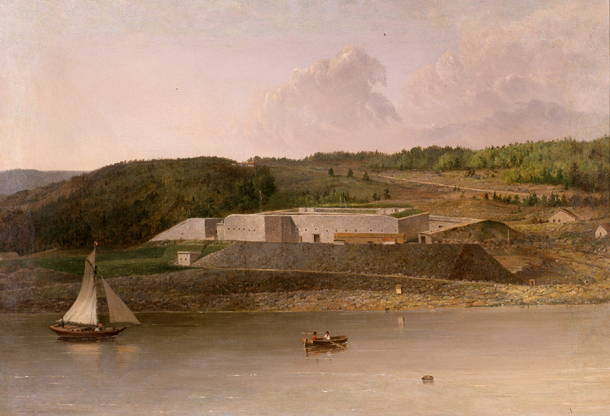
History & Significance
During the War of 1812, a British naval force defeated an outnumbered American force in the Battle of Hampden, then looted both Hampden and Bangor. The Aroostook War of 1838-1839 revived anti-British feeling and concern over the vulnerability of the region to another attack.
The response was inclusion of the Penobscot in the Third System of coastal fortifications and construction of a large, expensive granite fort at the mouth of the Penobscot River. Joseph G. Totten, the Army Corps of Engineers' foremost fortification engineer, designed the fort.
Built between 1844 and 1869, it was the first fort in Maine built entirely of granite. The Civil War garrison was less than fifty troops.
Congress appropriated $3,200 for a controlled minefield laid in the river during the Spanish–American War. In 1970 the fort was designated a National Historic Landmark. Today the fort stands as one of New England's best-preserved mid-nineteenth-century coastal fortifications.
Key Facts
Map
View larger map ↗ · © OpenStreetMap contributors
🧳 Visiting
What you’ll see when you visit:
- Granite seacoast fortification with well-preserved Civil War-era architecture
- Period cannons and military equipment on display
- Scenic location overlooking the Penobscot River
- Underground casemates and powder magazines to explore
- National Historic Landmark with preserved 19th-century defense structures
Sources
- https://en.wikipedia.org/wiki/Fort_Knox_(Maine)
- https://www.fortknoxmaine.com/
- https://www.battlefields.org/visit/heritage-sites/fort-knox-state-historic-site
- https://www.maine.gov/dot/programs-services/bridges/penobscot-narrows-bridge-observatory/fort-knox
- https://maineanencyclopedia.com/fort-knox/
- https://www.legendsofamerica.com/fort-knox-maine/
- https://mymaine.org/mainestateparks/fortknox