Fort William Henry (New Harbor, Maine)
New Harbor · Maine · King William's War
History & Significance
By 1692, the English regained control of the region, and Sir William Phips ordered construction of Fort William Henry to replace Fort Charles. Construction of the fort was ordered by Massachusetts Governor Sir William Phips and cost £20,000 to build.
The English colonial militia leader Benjamin Church assisted in the construction. The fort was built with walls that were 10 to 22 feet in height and a stone bastion which was 29 feet in height.
The fort was armed with 20 cannon and a garrison of 60 soldiers. The fortress proved strategically critical but structurally vulnerable.
Mortar used to build the stone walls was of poor quality and the fort's interior buildings could not stand bomb attack. The garrisons' water supply lay outside the fort walls.
The siege was led by Pierre Le Moyne d'Iberville and Baron de St Castin between August 14–15, 1696. Commander of Fort William Henry, Captain Pasco Chubb, surrendered the fort.
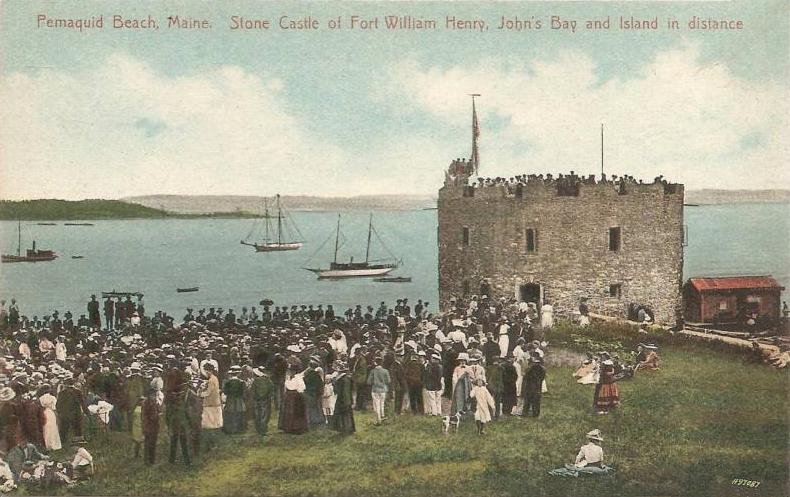
The victory at Pemaquid was one of the most significant the French had during the war. The state acquired the site in 1902, and in 1908 rebuilt the tower of Fort William Henry under guidance of historian John Henry Cartland, using many original stones. The fort was added to the National Register of Historic Places on December 1, 1969.
Key Facts
Map
View larger map ↗ · © OpenStreetMap contributors
🧳 Visiting
What you’ll see when you visit:
- Reconstructed stone fort from 1692, largest in colonial New England
- Siege history and King William's War context
- Archaeological remains and colonial artifacts on-site
- Views of Pemaquid Point and surrounding settlement area
Sources
- https://en.wikipedia.org/wiki/Fort_William_Henry_(Maine)
- https://www.maine.gov/dacf/parks/discover_history_explore_nature/history/colonialpemaquid/fortwh.shtml
- https://en.wikipedia.org/wiki/Siege_of_Pemaquid_(1696)
- https://friendsofcolonialpemaquid.org/Fort-William-Henry
- https://archaeology.org/issues/july-august-2018/off-the-grid/trenches-maine-colonial-pemaquid-state-historic-site/